
Grief & Loss

Understanding Grief
Grief is a natural response to loss. It can show up in many ways, including emotional, physical, cognitive, and relational experiences. There is no “right” way to grieve, and there is no set timeline.
Alongside sadness, grief can also include feelings like anger, relief, numbness, guilt, or confusion about who you are after the loss. These experiences are often less talked about, but they are a normal part of the process. Therapy can offer a space to explore all of this with care and without judgment.

My Approach to Grief Work
I approach grief through a companioning model, which means I don’t see grief as something to fix or move past, but something to be witnessed, supported, and lived alongside.
In our work together, we’ll create space for the full range of your experience, including the parts that feel messy, complicated, or hard to name. We may explore how your identity is shifting, how to make meaning from your loss, and how to maintain a continued connection with the person or life you’ve lost.
I also hold space for conversations around faith, doubt, or spirituality when they arise, always guided by your beliefs and experiences.
Types of Grief I Support:
Loss of a loved one
Anticipatory grief
Complicated or prolonged grief
Relationship loss, including breakups, divorce, or estrangement
Identity loss and major life transitions
Coping with Grief
Grief doesn’t need to be “managed” perfectly, but there are ways to support yourself through it:
Allow your emotions to exist without judgment
Find ways to express your grief, such as writing, music, movement, or art
Create personal rituals or ways to stay connected to what you’ve lost
Notice your limits and balance rest with daily responsibilities
Seek support through community, trusted relationships, or therapy

When to Seek Additional Support
You might consider therapy if you are:
Feeling stuck, overwhelmed, or isolated in your grief
Struggling to function in your daily life
Experiencing persistent numbness or disconnection
Carrying intense guilt
or shame
Feeling unsure of who you are after a loss
Books (for Adults)
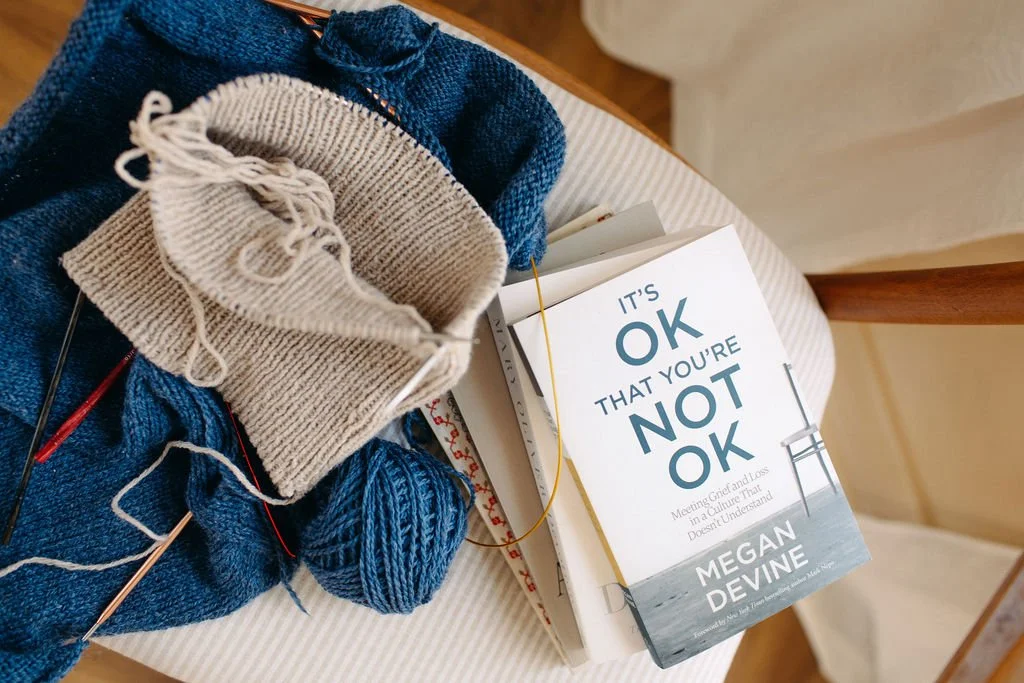
It’s OK That You’re Not OK
It’s Okay to Laugh (Crying is Cool Too)
Understanding Your Grief
Finding Meaning
The Grieving Brain
Resources
Books (for Kids)
When Dinosaurs Die
The Invisible String
Websites & Organizations

Ready to get started?
If you’re looking for support, you’re welcome to get in touch.